
Why do our mouths water when we smell food?
The Real Answer
Your mouth can water when you smell food because the smell can trigger a cephalic-phase response—your nervous system begins preparing for food before you actually eat it. Food-related smells and tastes can activate autonomic reflexes that stimulate the salivary glands, along with other digestive responses, before nutrients have even reached your stomach.
This is more than just imagining that something tastes good. In controlled research, food odors increased saliva flow compared with non-food odors and no odor. Interestingly, the researchers found more saliva without significant changes in the saliva-composition measures they tested. In other words, the immediate response was largely to produce more saliva, not necessarily a completely different kind of saliva.
The effect also varies. Different foods and smells do not produce exactly the same response in everyone, and how strongly your mouth waters can depend on the person and the particular sensory cue.
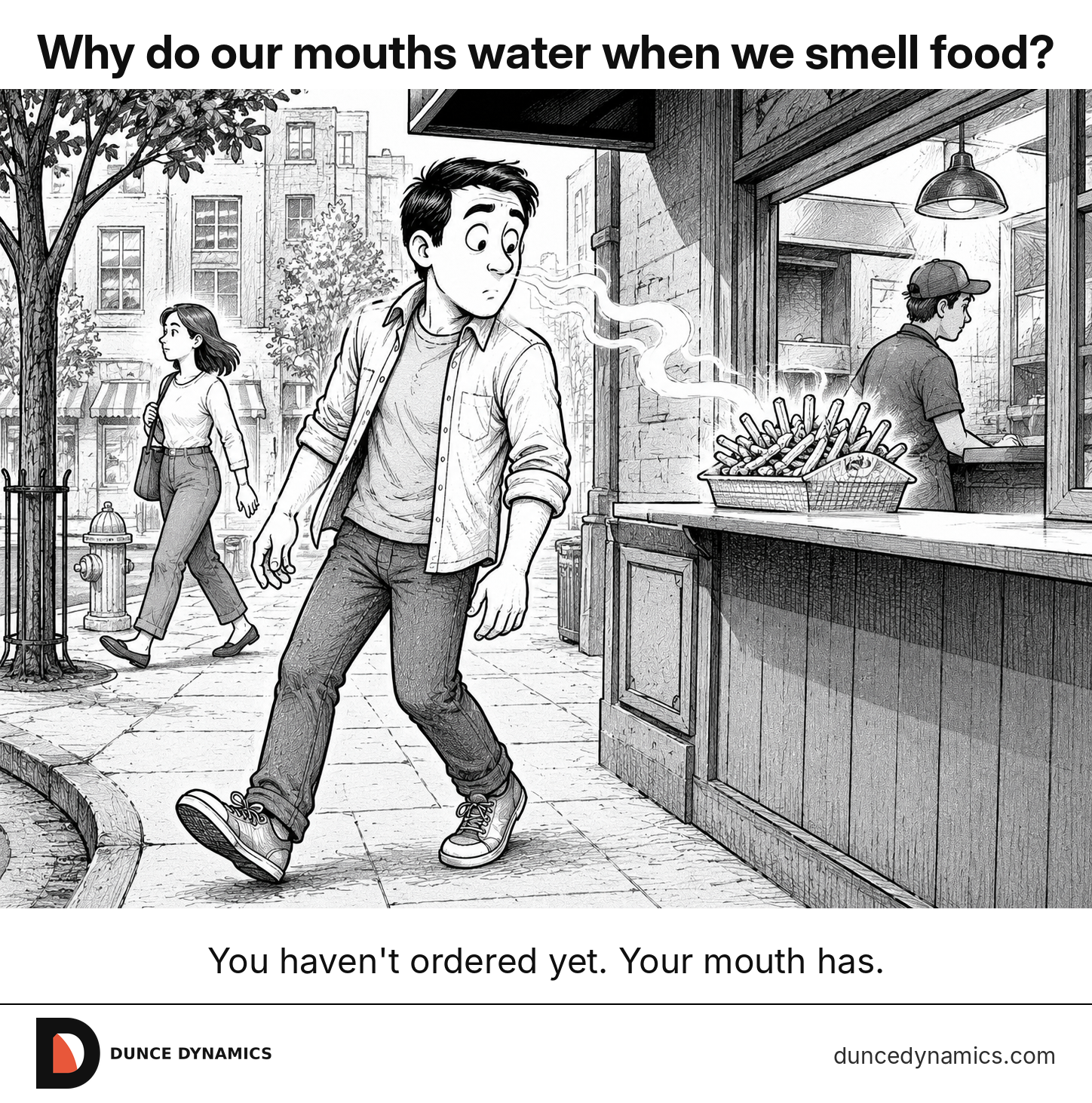
You can be walking somewhere hungry with no intention of stopping until the smell of fries hits you and your mouth starts watering. Five seconds later you’ve slowed to half speed and you’re standing outside checking the menu.
The Dunce Dynamics Institute Examines Why People Ask This
The reaction is noticeable because it can begin before you have tasted—or even touched—the food. A smell drifting through a restaurant or kitchen can cause an obvious physical response almost immediately, making it feel as though your body has started making dinner plans before you have.