
Why do prices end in .99?
The Real Answer
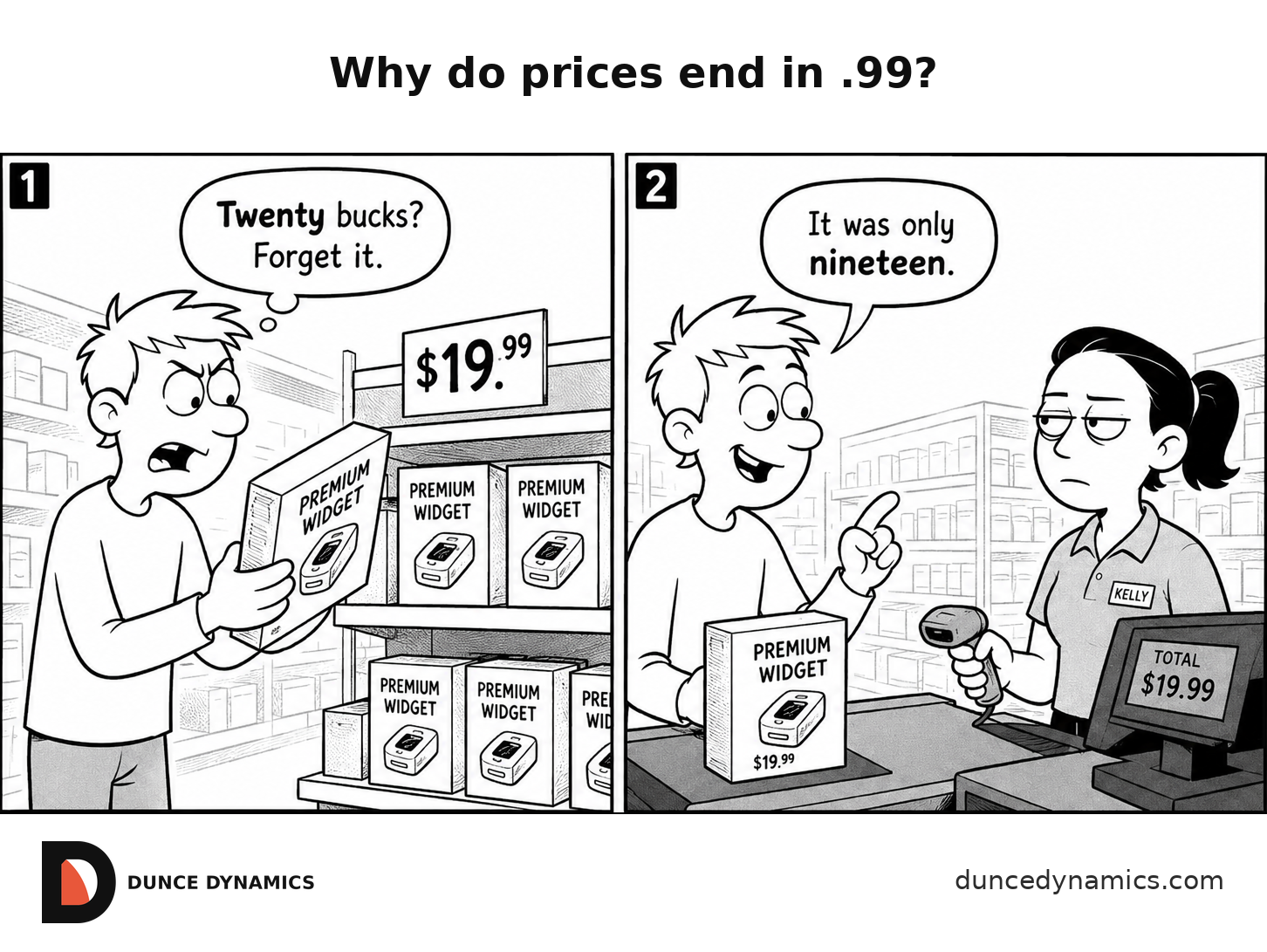
Prices often end in .99 because retailers use just-below pricing: a price such as $19.99 stays just under the next round number, and research shows that the change in the leftmost digit can make the lower price feel meaningfully cheaper in some comparisons.
That effect is usually called the left-digit effect. People do not all respond the same way, and a .99 ending does not magically fool everyone, but the convention can influence price perception and can also signal that an item is being sold as a bargain or ordinary retail price rather than a premium round-number price.
So the extra penny is not economically important by itself. Its value to the seller is that 19.99 is visually and psychologically on the nineteen side of the boundary while 20.00 is unmistakably twenty.
You see $19.99, call it twenty bucks when you are complaining about the price, then call it nineteen when you are standing at checkout trying to justify buying it. The cashier scans it and you quietly stop doing math.
The Dunce Dynamics Institute Examines Why People Ask This
People ask because .99 pricing is so common that it looks deliberate, yet the literal savings from the round number is only one cent. The curiosity comes from the mismatch between the tiny arithmetic difference and the large amount of retail effort spent preserving it.