
Why do we apologize when someone bumps into us?
The Real Answer
Saying “sorry” after someone bumps into you usually isn't a literal admission that the collision was your fault. In everyday conversation, apologies also work as social repair: they acknowledge that something awkward happened, signal that you aren't looking for conflict, and help both people move on quickly.
How automatic that response feels depends on personality, situation, and culture. In places where “sorry” is commonly used as a politeness marker, it can come out almost reflexively—even when you're the person who got bumped. The word is doing less work as a confession and more work as social lubricant.
Someone crashes into you at full speed and you both instinctively apologize like you’ve personally wronged each other. “Sorry” is the verbal traffic cone you drop between two strangers so nobody turns a shoulder collision into a court case. The guy’s got his elbow in your ribs and you’re already in the negotiation phase of your relationship.
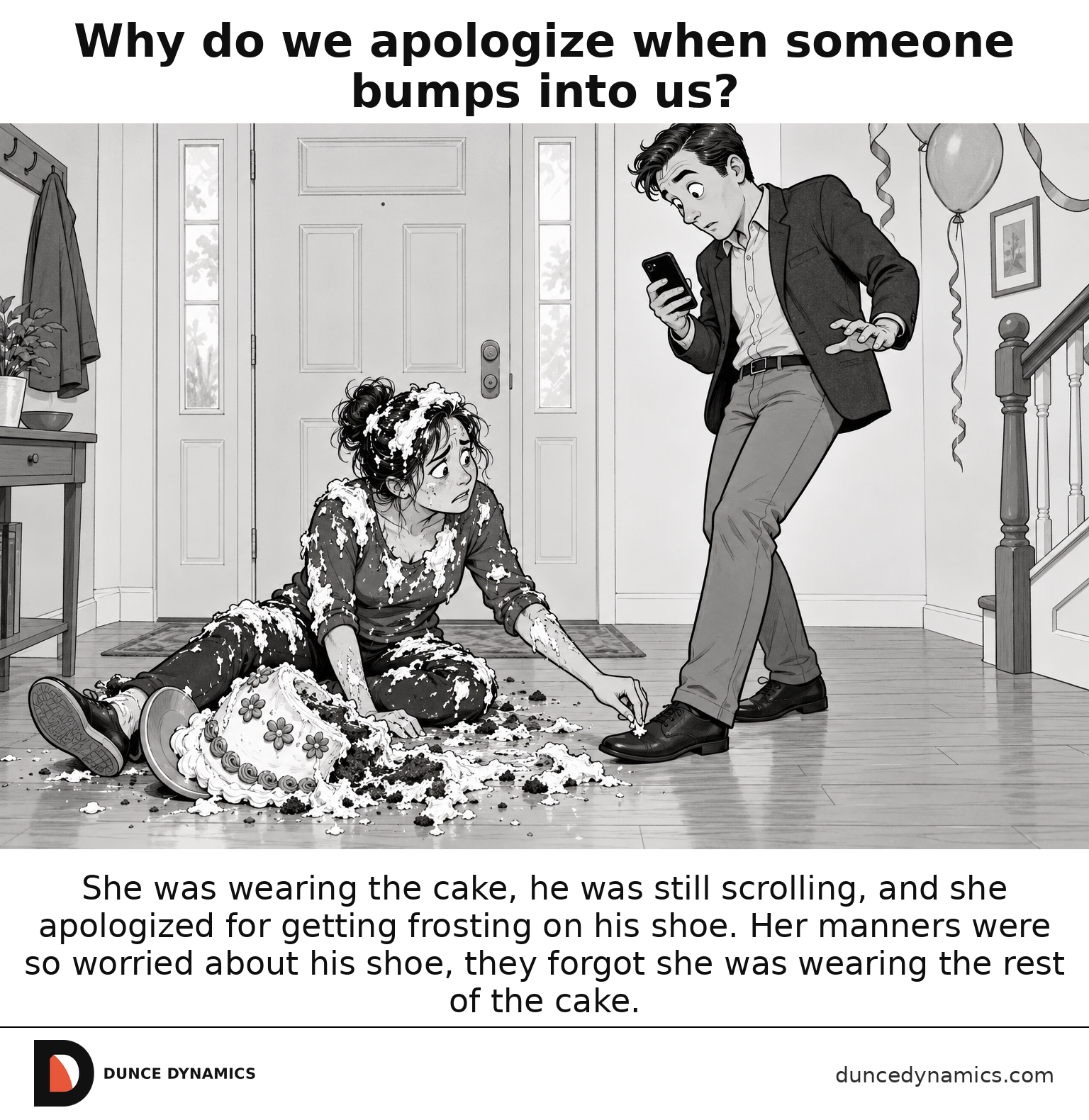
The Dunce Dynamics Institute Examines Why People Ask This
The strange part is hearing 'sorry' come out even when the collision was not your fault. That makes people notice that an apology can do more than assign blame; it can also smooth an awkward interaction and signal that nobody wants a confrontation.