
Why does bread get stale?
The Real Answer
Bread gets stale because its internal structure keeps changing after baking. A major part of that change is starch retrogradation: starch molecules, especially amylopectin, gradually reorganize into more ordered structures while water is redistributed through the bread.
Those changes make the crumb firmer, drier-feeling, and less pleasant even when the bread has not simply lost all of its moisture to the air. Moisture movement and other bread components also contribute, so staling is more complicated than the bread dried out.
That is why bread can become unmistakably stale while still containing plenty of water. Staling is a texture-and-structure change as much as a moisture-loss problem.
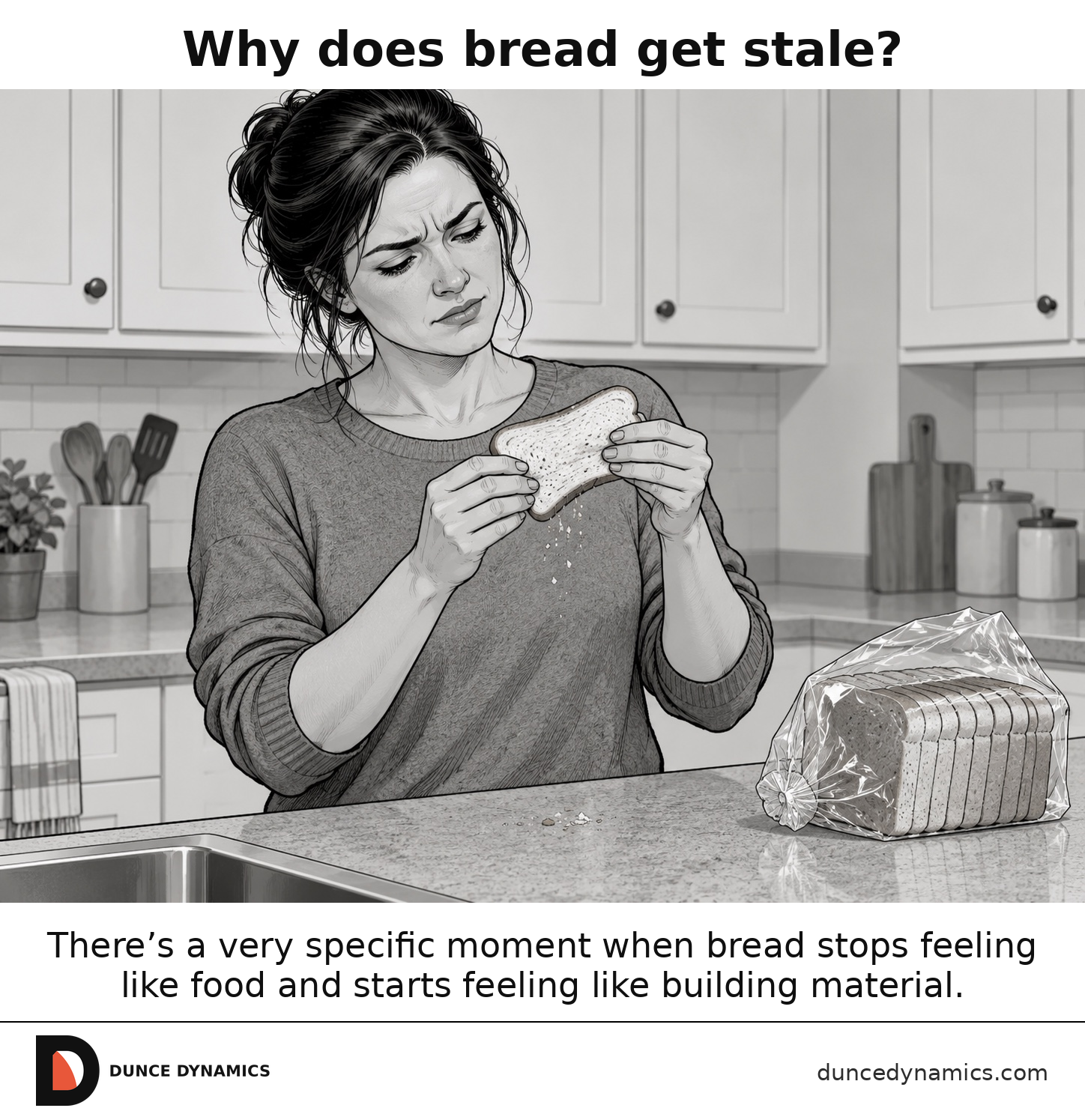
Stale bread is the only food you test by squeezing it like you’re checking produce. You press the loaf through the bag, decide it feels “maybe okay,” then reach for the toaster because apparently heat is now part of the inspection process.
The Dunce Dynamics Institute Examines Why People Ask This
People ask because stale bread feels dry and hard, so simple water loss seems like the obvious explanation. The surprising part is that bread can still contain water while becoming stale because its starch and water distribution are reorganizing inside the crumb.