
Why does fresh snow absorb so much sound?
The Real Answer
Fresh snow can make the world sound quieter because its loose, porous structure absorbs and weakens some of the sound that reaches the ground instead of reflecting it back efficiently. The many tiny air spaces between fresh snow crystals create a surface that is much less acoustically reflective than hard pavement, bare ground, or ice.
That means less sound energy bounces back into the surrounding environment, so footsteps, traffic, voices, and other noises can seem noticeably softer after a fresh snowfall.
The effect depends on the condition of the snow. Fresh, fluffy snow is especially good at reducing reflected sound, while older snow that has become compacted, crusted, or icy can behave differently and reflect more sound. So the familiar quiet after snowfall is not simply because “snow blocks sound”; it depends heavily on the snow’s porous structure and physical state.
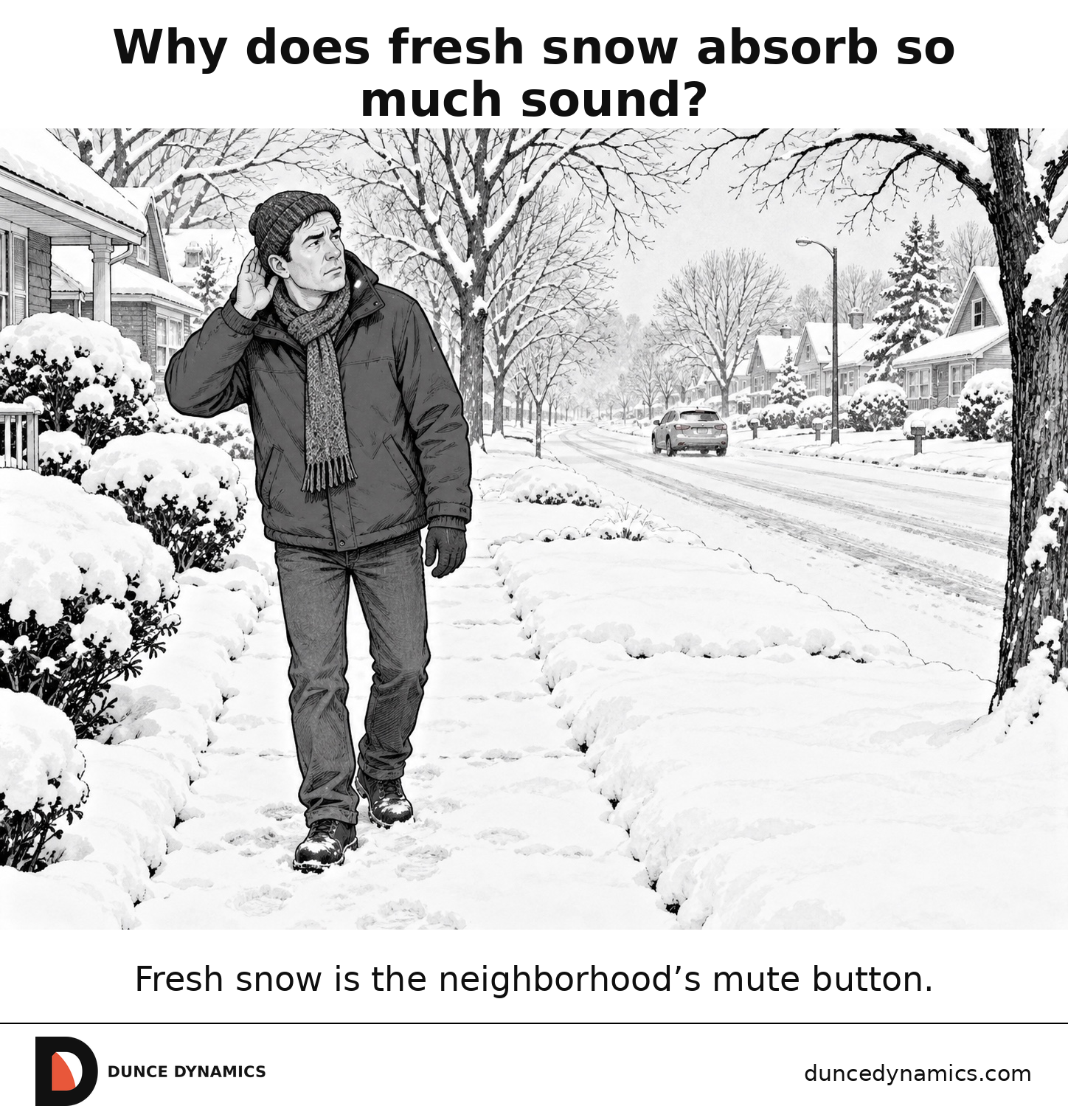
Fresh snow can make an entire neighborhood noticeably quieter, and the first thing you do is step outside and say, “Wow, it’s so quiet.” Apparently the proper response to discovering silence is to immediately contribute to it.
The Dunce Dynamics Institute Examines Why People Ask This
People ask because the change can be surprisingly obvious after a fresh snowfall. Familiar streets and yards can suddenly seem unusually muted even though the usual buildings, roads, and sources of noise are still there, making it natural to wonder what changed acoustically.