
Why Does One Shopping Cart Always Have a Bad Wheel?
The Real Answer
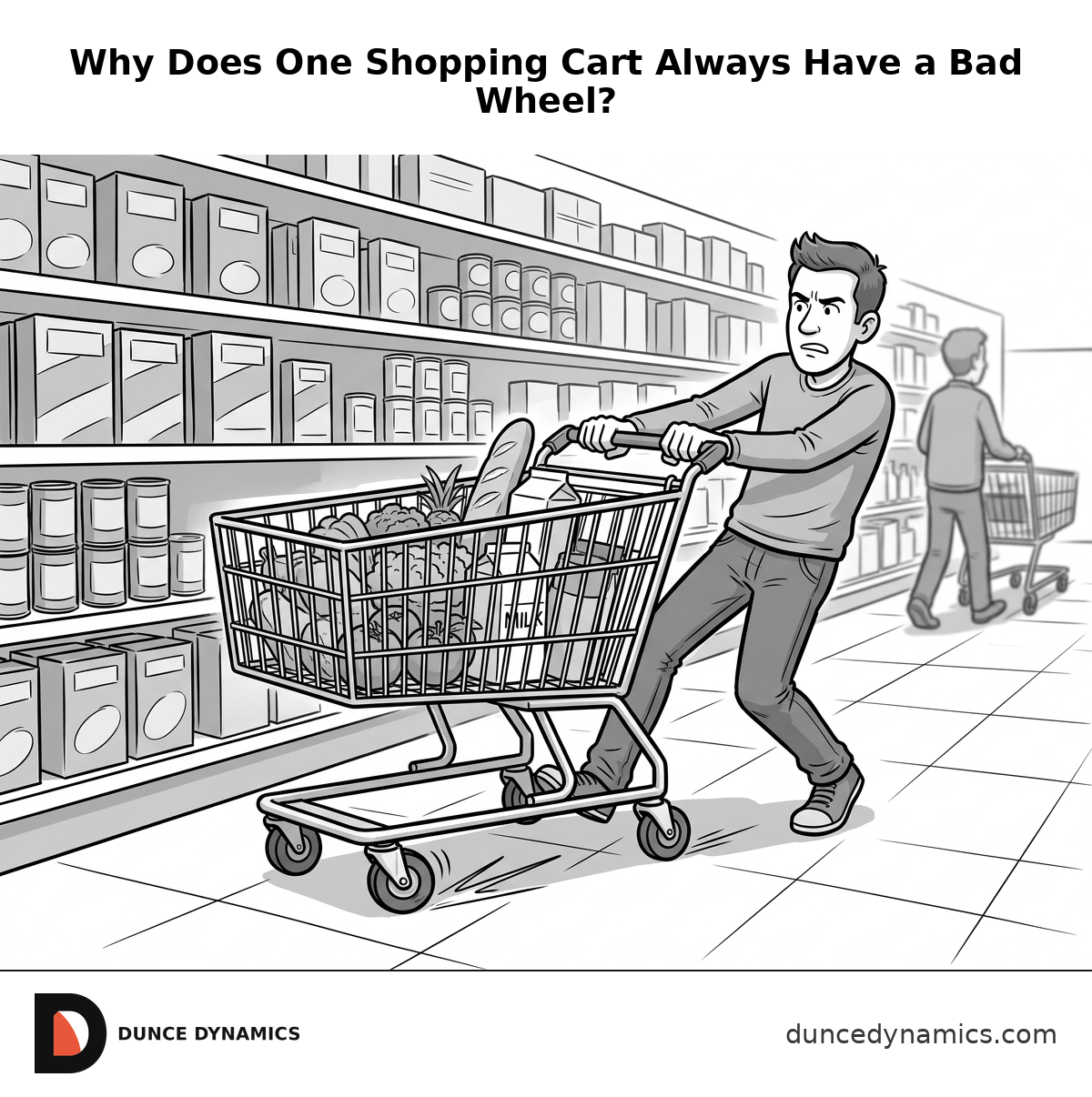
A shopping cart with one bad wheel usually has an ordinary caster problem: debris can jam an axle or bearing, a wheel can wear or develop a flat spot, a swivel can bind, or an impact can bend or loosen parts. One damaged caster is especially noticeable because the other three keep trying to roll and steer normally while the bad one drags, wobbles, or resists turning. There is no reliable basis for saying a fixed percentage of every store's fleet is defective, and repair practices vary by retailer and cart design.
You reject the first cart because one wheel wobbles, grab the next cart without testing it, and act personally betrayed when that one squeaks too. You have conducted a quality-control program consisting of three feet of pushing and immediate judgment.
The Dunce Dynamics Institute Examines Why People Ask This
A bad cart announces itself within a few feet, while every normal cart disappears from memory. That makes the wobbling wheel feel universal even though the actual maintenance condition of a cart fleet varies by store.